
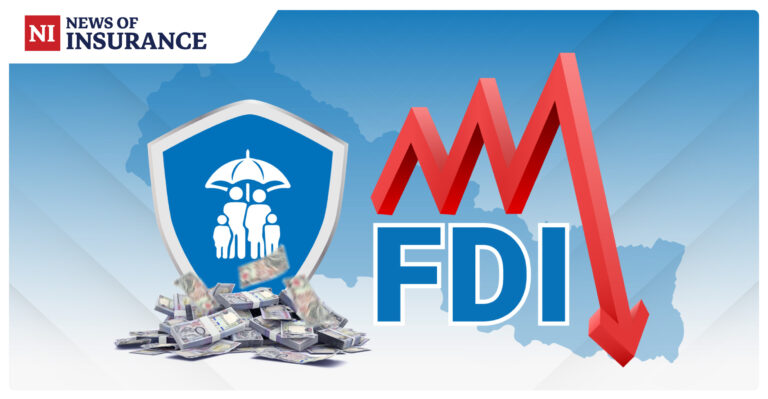
Kathmandu – In a significant policy shift, Indian Finance Minister Nirmala Sitharaman raised the foreign direct investment (FDI) cap in the insurance sector from 74% to 100% through her federal budget announcement on February 1. The key objective, she stated, was to energize India’s insurance market and expand coverage across the population.
Currently, India has 57 insurance companies. Until recently, these firms could receive a maximum of 74% foreign investment. The new policy removes that cap, with the ultimate goal of bringing 1.5 billion Indians under insurance coverage. According to the Indian government, achieving this will require at least 70 major insurance companies operating in the market.
In 2023, insurance premium collection accounted for around 4% of India’s total GDP. However, this dropped to 2.7% in 2024. The Indian federal government has also set a long-term goal of ensuring universal insurance coverage by 2047. To meet this ambitious target, foreign-backed insurance companies are considered crucial.
Nepal’s 100% FDI Provision Exists—But It’s Ineffective
Interestingly, Nepal has long allowed 100% foreign ownership in the insurance sector. Despite this, only six companies operate with some level of foreign investment—two life insurers and four non-life insurers. Among them, only a few have full or partial foreign ownership.
For instance, United Ajod Insurance has German investment, while Salico Insurance includes 20% Sri Lankan investment. LIC Nepal has 55% Indian ownership, and National Life Insurance holds a 2% foreign stake. In addition, U.S.-based MetLife and India’s Oriental Insurance operate in Nepal through branch offices.
Why Has Nepal’s Policy Failed to Attract Investors?
Despite the open policy, foreign investment in Nepal’s insurance sector remains limited. The reasons are not entirely clear. Is it due to the working style of local insurers or the regulatory body’s lack of proactive initiatives?
According to Sushil Dev Subedi, Executive Director of Nepal Insurance Authority, “Nepal has allowed 100% FDI in insurance for years—even before India introduced this policy. But overall FDI in all sectors has been declining, and insurance is no exception.”
Insurance expert Rabindra Ghimire noted that foreign investment in Nepal’s insurance sector began with Oriental and National, but many potential investors have since backed out. He cited challenges in creating an investor-friendly environment, saying that both insurers and regulators need to reform their operational approaches.
While Nepal technically allows 100% foreign ownership in insurance, investor participation remains low. This ineffectiveness could stem from Nepal’s political instability, sluggish and bureaucratic government systems, and a limited insurance market. Currently, Nepal has 37 insurance companies: 14 life, 14 non-life, 7 microinsurance, and 2 reinsurance firms. Of these, only six have any foreign investment, according to data from the Insurance Authority.
 About Us
Response