
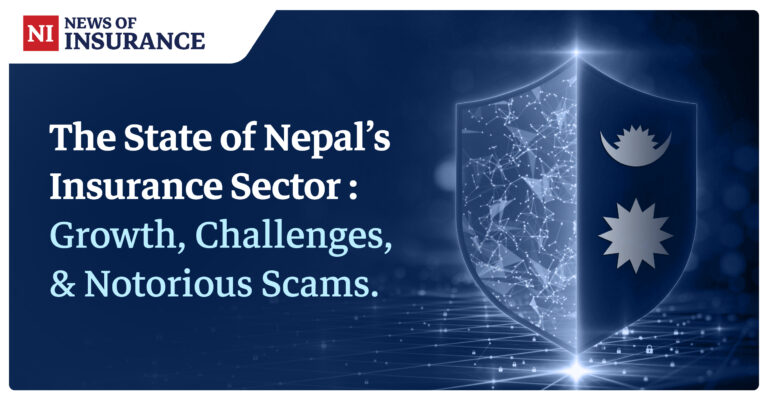
News of Insurance – The insurance industry in Nepal has been a pivotal component of the nation’s financial architecture, offering individuals and businesses a safeguard against unforeseen risks. This article delves into the significance of insurance in Nepal, explores its various types, provides a comparative analysis of insurance companies, and highlights notable achievements and challenges, including prominent scams that have impacted the sector.
Importance of Insurance in Nepal
Insurance serves as a critical tool for financial protection, enabling individuals and businesses to mitigate potential losses arising from accidents, health issues, natural disasters, and other unforeseen events. By pooling resources, insurance companies provide a safety net that supports economic stability and encourages investment by reducing uncertainty. In Nepal, where the economy is predominantly rural and susceptible to natural calamities, insurance plays a vital role in fostering resilience and promoting sustainable development.
Advantages of Insurance:
- Financial Security: Provides compensation for covered losses, ensuring financial stability for policyholders.
- Risk Management: Helps individuals and businesses manage and transfer risk effectively.
- Economic Growth: Encourages investment and entrepreneurship by reducing uncertainty.
Disadvantages of Insurance:
- Cost: Premiums can be a financial burden, especially for low-income individuals.
- Complexity: Insurance policies can be complex and difficult to understand, leading to potential misunderstandings.
- Fraud: The industry is susceptible to fraudulent activities, which can undermine trust and lead to increased costs.
Types of Insurance in Nepal
The Nepalese insurance market offers a diverse range of insurance products tailored to meet the varying needs of its population. The primary categories include:
- Life Insurance: Provides financial protection to beneficiaries in the event of the policyholder’s death. Common products include:
- Term Life Insurance: Offers coverage for a specified period.
- Whole Life Insurance: Provides lifetime coverage with a savings component.
- Endowment Policies: Combine life coverage with savings, paying out a lump sum after a specific term or upon death.
- Health Insurance: Covers medical expenses arising from illnesses or injuries. Policies often include hospitalization costs, surgical expenses, and sometimes outpatient services. The National Health Insurance Program (NHIP) aims to increase access to healthcare services across the country.
- General (Non-Life) Insurance: Encompasses various policies protecting against specific risks, including:
- Motor Insurance: Covers damages and liabilities related to vehicles.
- Fire Insurance: Protects properties against fire-related damages.
- Marine Insurance: Covers goods in transit over waterways.
- Travel Insurance: Provides coverage for trip cancellations, medical emergencies, and other travel-related risks.
- Microinsurance: Designed for low-income individuals, offering affordable coverage for health, life, and property, thereby promoting financial inclusion.
Comparative Analysis of Insurance Companies in Nepal
As of early 2024, Nepal’s insurance industry comprises a mix of life, non-life, microinsurance, and reinsurance companies. A comprehensive list of these companies can be found on InsurerGuru.
Notable Achievements and Challenges in Nepal’s Insurance Sector
Achievements:
- Growth in Insurance Penetration: There has been a steady increase in insurance penetration, indicating a growing awareness and acceptance among the Nepalese population.
- Diverse Product Offerings: Insurance companies have expanded their product portfolios to cater to the diverse needs of consumers, including the introduction of microinsurance products targeting low-income groups.
Challenges:
- Low Insurance Penetration: Despite growth, the overall penetration remains low, with less than 6% of the population having some form of life insurance.
- Regulatory Issues: The industry has faced challenges related to regulatory oversight, with allegations of corruption and unethical practices within regulatory bodies.
- Fraudulent Activities: The sector has been marred by fraudulent activities, including fake claims and scams, which have undermined public trust.
Prominent Scams in Nepal’s Insurance Industry
- Helicopter Rescue Scam: In 2018, a major insurance scam was uncovered involving trekking and mountaineering agencies orchestrating fake helicopter rescues and unnecessary medical treatments for tourists to claim insurance money. This fraudulent activity led to significant financial losses for international insurers and tarnished Nepal’s tourism reputation.
- Rastriya Beema Company Scandal: In late 2024, a multi-million rupee accounting scandal was exposed at Rastriya Beema Company, involving embezzlement of funds over several years. Despite regular inspections by the Regulatory Insurance Authority, these activities went unnoticed, raising serious concerns about regulatory effectiveness and corporate governance within the industry.
The insurance sector in Nepal plays a crucial role in providing financial security and promoting economic stability. While there have been significant achievements in expanding coverage and diversifying products, the industry faces ongoing challenges, including low penetration rates, regulatory issues, and fraudulent activities. Addressing these challenges through enhanced regulatory frameworks, increased public awareness, and improved corporate governance is essential to foster trust and ensure the sustainable growth of Nepal’s insurance industry.
 About Us
Response